


(Note: due to breaking news, this flash analysis replaces this week’s US Border News Newsletter)
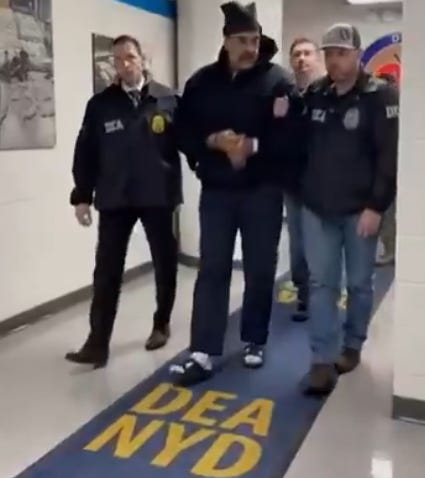
The impacts of the weekend arrest of Venezuelan President Nicolás Maduro, along with his wife, during a US military raid in Caracas, to face US drug and weapons charges, are being closely watched along the US Southern Border.
Florida and Texas are home to the largest number of Venezuelans in the US.
Southern Florida, particularly the Miami suburbs of Doral and Weston, is home to at least 300,000 Venezuelans. In Texas, the second largest Venezuelan community (estimated at 60,000) is in Houston, where most have settled in the suburb of Katy.
Additionally, Houston is the headquarters of ExxonMobil and ConocoPhillips (both of which had their operations in Venezuela seized by the Venezuelan government), as well as Chevron (the only US oil company still operating in Venezuela).
Ironically, one of the Venezuelan celebrations of Maduro’s capture in Doral, Florida, occurred around the Chevron gas pumps outside a popular Venezuelan eatery and store:
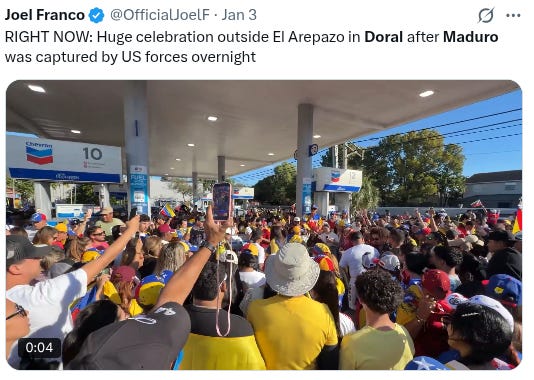
The mood within the Venezuelan community had been one of fear after President Trump announced the end of “Temporary Protected Status” (TPS), which allowed many of them to remain in the U.S. legally. That matter is being challenged in court. 600,000 Venezuelans with TPS remain in limbo. -But that did not stop many of them from rejoicing over Maduro’s ouster.
Elsewhere in Southern Florida, reaction ranged from celebration by GOP lawmakers to worries by Democrats about what happens in Venezuela now that Maduro is removed from power.
Southern Florida’s sizable Cuban community is also cautiously watching for signs of possible spillover effects of Maduro’s ouster in their homeland. Cuba helped Maduro remain in power by staffing Venezuela’s Intelligence Services and Maduro’s personal security forces, many of whom were killed by US forces during Maduro’s capture.
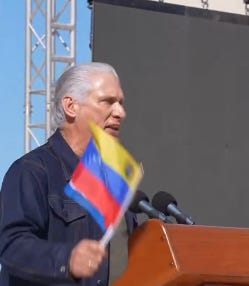
Cuban President Miguel Díaz-Canel Bermúdez condemned the US action while waving a Venezuelan flag in front of a large crowd in Havana on Saturday.
When asked on NBC’s “Meet the Press” on Sunday whether the Cuban Government was the Trump Administration’s next target, Secretary of State Marco Rubio (who also serves as the president’s National Security Advisor) had an ominous warning:
“The Cuban Government is a huge problem. I think they’re in a lot of trouble, yes. I’m not going to talk to you about what our future steps are going to be and our policies are going to be right now in this regard. But I don’t think it’s any mystery that we are not big fans of the Cuban regime, who, by the way, are the ones that were propping up Maduro.” -US Secretary of State Marco Rubio
During a news conference Saturday, January 3, 2026, President Trump vowed justice for US oil companies whose investments and infrastructure were confiscated by Venezuela decades ago:
“This constituted one of the largest thefts of American property in the history of our country. Considered the largest theft of property in the history of our country. Massive oil infrastructure was taken like we were babies, so we didn’t do anything about it ... America will never allow foreign powers to rob our people or drive us back into and out of our own hemisphere.” -President Donald Trump
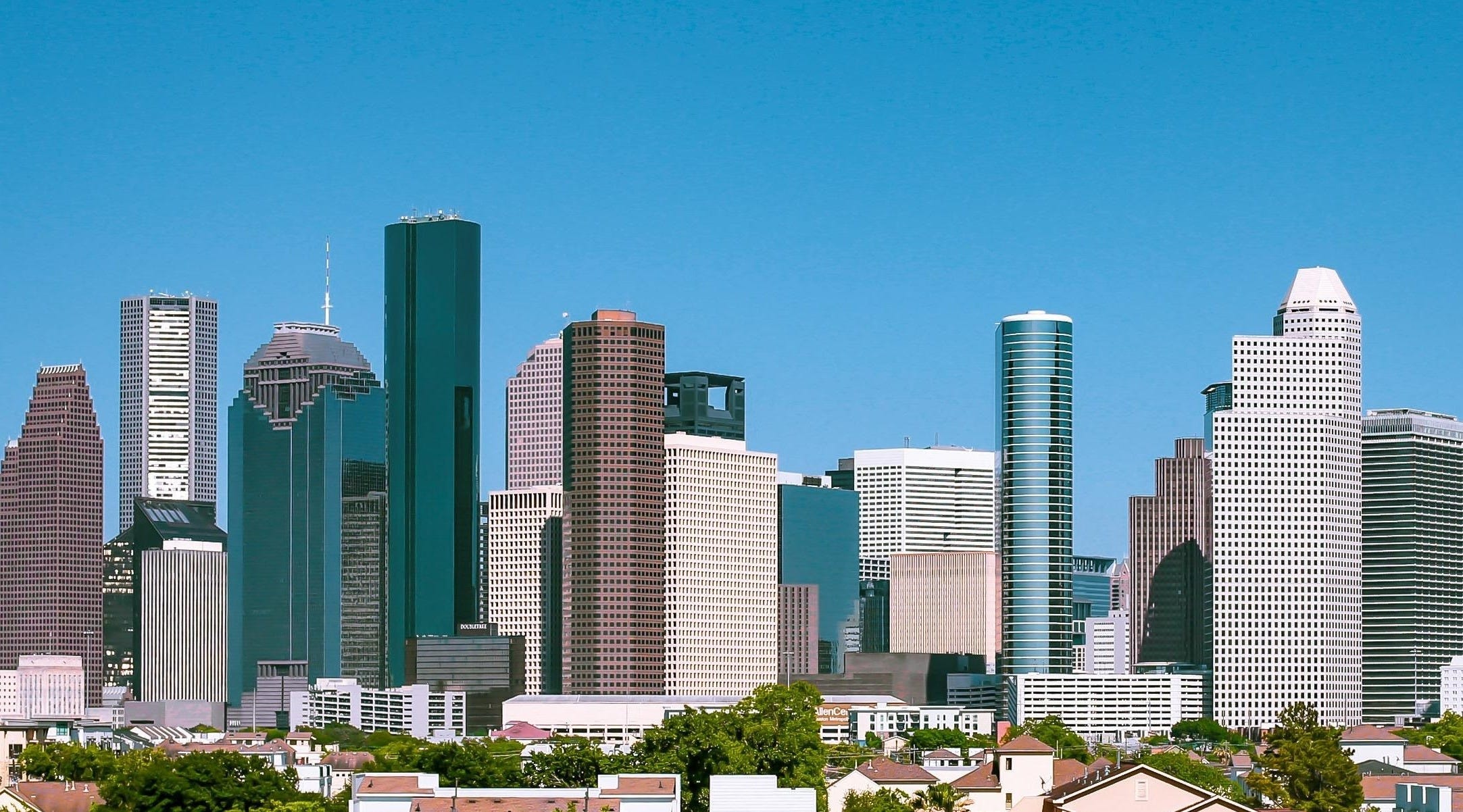

In Houston, where the largest US energy exploration companies are headquartered, Trump’s announcement of their expected role in stabilizing a post-Maduro Venezuela through massive private investment likely has rocked those companies’ boardrooms:
“We’re going to have our very large United States oil companies, the biggest anywhere in the world, go in, spend billions of dollars, fix the badly broken infrastructure, the oil infrastructure and start making money for the country.” -President Donald Trump
All that assumes the Venezuelans cooperate in such an effort, of course.
The larger danger for US Southern Border States is that things don’t go as President Trump plans. If Maduro’s ouster further destabilizes Venezuela, another large wave of migration from that country could be quickly unleashed.
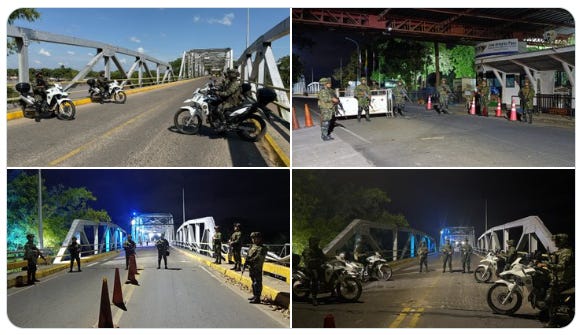
The neighboring country of Colombia - clearly worried about that possibility - is already reinforcing its border crossings with Venezuela.
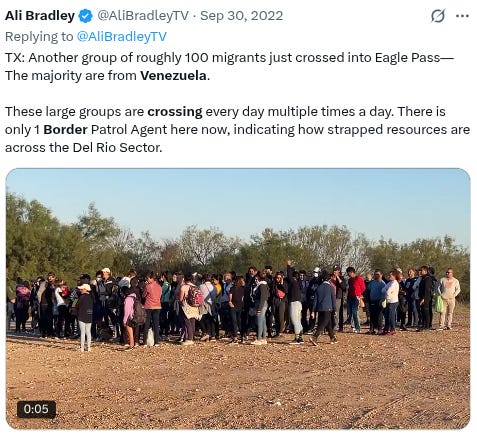
If another wave of Venezuelan migration occurs, US Southern Border states have already seen what could happen next:
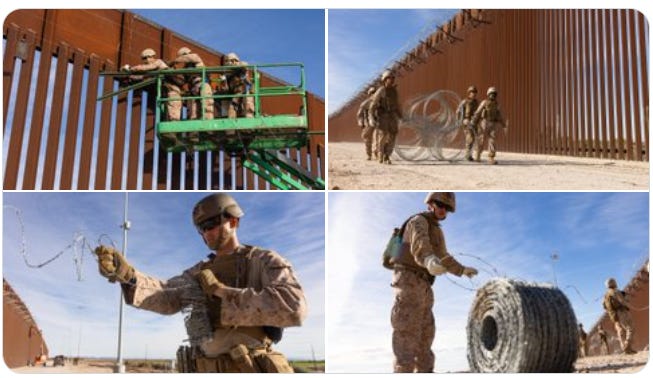
The difference between 2022 and now is that US troops and barriers have since been deployed to reinforce the Southern US-Mexico Land Border. Whether that would be enough to prevent another large wave of Venezuelans from entering the country (should one occur) is an open question.
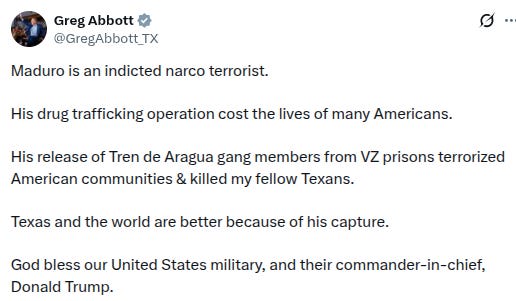
And, for the moment, it’s a possibility that the Governor of Texas, whose state was on the front lines of the last mass-migration from Venezuela, does not appear to be worried about:
How concerned are you about what happens next in Venezuela following Maduro’s arrest?
Share your opinion in the comments to this article!
Thanks for reading the US Border News! This post is public, so feel free to click the button below to share it.
Abrazos,
Jack Beavers


It had to be done. We could not, responsibly, permit Venezuela to serve as satellite base for (at least) four potent threats to America -- not counting their death dealing drug cartel and illegal oil shipments. There are always risks and contingencies; but, we have an administration that we can trust.
Jack, our President said that the USA would control Venezuela until a fair election occurs. We can believe that President Trump will ensure that the election is fair. Interesting times indeed. Thank you for your good work for us Patriots.