

This article by Uriel J. García and Stephen Simpson is from The Texas Tribune (a nonprofit, nonpartisan media organization that informs Texans — and engages with them — about public policy, politics, government, and statewide issues) and is republished by US Border News with permission.
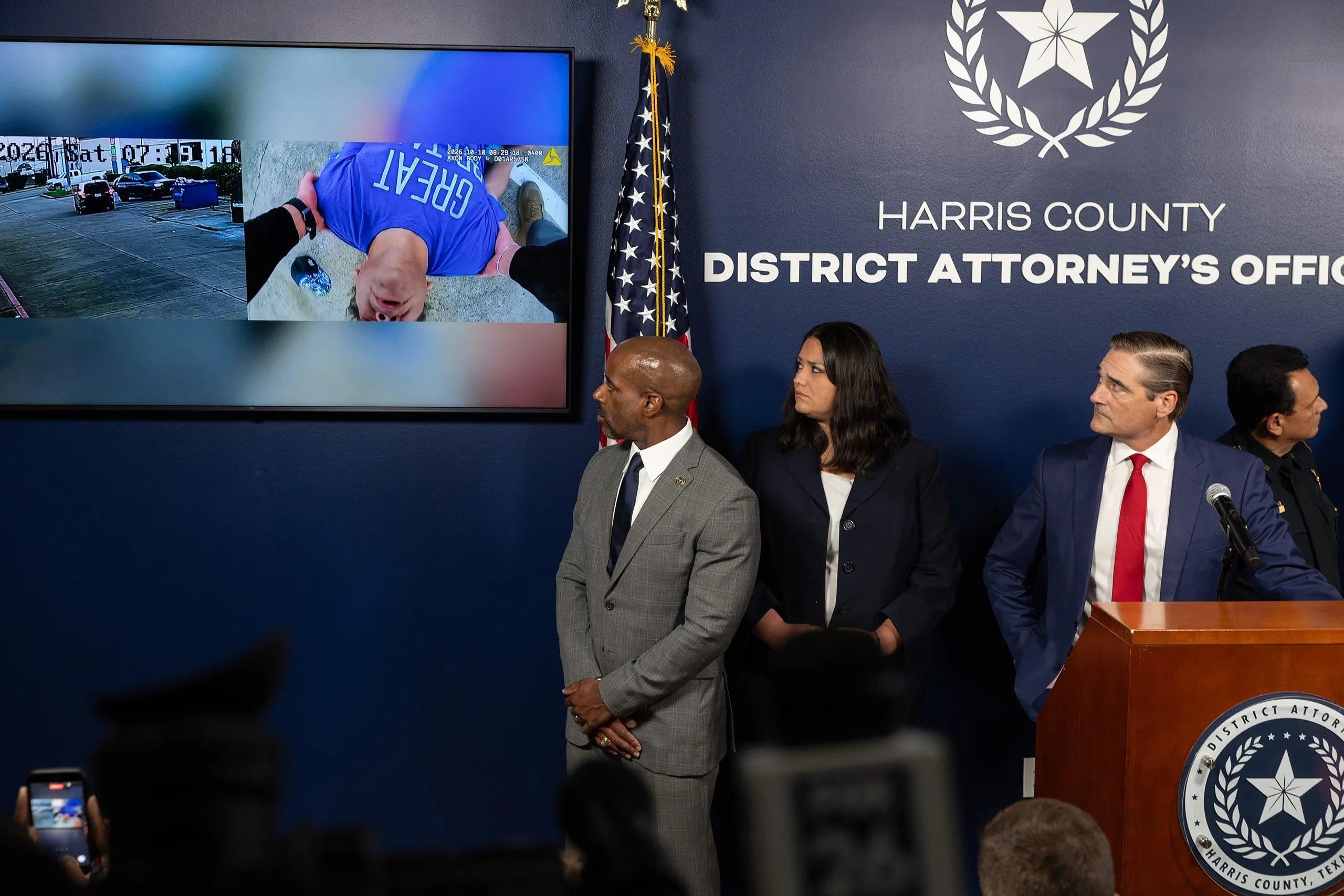
A Harris County, Texas grand jury indicted a federal immigration agent Friday after an Immigration and Customs Enforcement officer was filmed on video running over a fleeing pedestrian during an Oct. 10 vehicle pursuit in Houston.
District Attorney Sean Teare said his office launched a criminal investigation of the ICE agent after his office reviewed footage showing an unmarked patrol vehicle striking Miguel Parra-Hernandez, 48.
Teare said ICE agent Mario Alberto Morales faces a felony charge of aggravated assault with a deadly weapon — the agent’s vehicle. If convicted, Morales could face between two to 20 years in prison, Teare said.
“The evidence that we have in this case is as clear as any that I’ve prosecuted or investigated,” Teare said at a news conference at the Harris County criminal courthouse.
Surveillance footage captured from a nearby business depicts two men getting out of a white pickup truck and running in different directions through a parking lot. The footage shows a black SUV driven by Morales pursuing one of the men from behind as they ran.
“What happened next shocked our entire community,” Teare said. His office shared ICE body camera footage that showed Morales swerve his vehicle toward Parra-Hernandez at the moment of impact. The agent’s car is jostled — authorities say the vehicle ran over Parra-Hernandez — and the pedestrian can be heard crying out in pain.
Morales stopped his SUV and exited the vehicle. The agent’s body camera shows Parra-Hernandez on the ground, writhing in agony. Morales grabs one of his limp legs and moves it.
“Give me your hand,” Morales told Parra-Hernandez as he turned him face-up. “My leg!” Parra-Hernandez yelled.
“I was coming and I hit him with the car,” Morales told another ICE agent nearby.
Teare also released a recording of a 911 call Morales made.
“I tried to get around him, and he hit my car,” Morales told a 911 dispatcher, according to the audio. The dispatcher asked Morales if he was near Parra-Hernandez.
“Yeah, he’s fine, he’s just complaining of pain,” Morales responded.
He later told the dispatcher that Parra-Hernandez was handcuffed, and Morales planned to put him in the ICE agent’s vehicle. The operator advised the agent not to move him.
A “very concerning” pursuit
Harris County Sheriff Ed Gonzalez, who was also at the news conference, said that there were two other handcuffed people in the back seat of Morales’s vehicle before the crash occurred.
That is “very concerning,” Gonzalez said.
“I know of no law enforcement agency that would deem that to be acceptable,” he added. “To the contrary, it’s very unsafe.”
Teare agreed, saying, “No law enforcement officer would have two people in custody in the back of their vehicle who are not wearing seatbelts and engage in another pursuit.”
ICE said that agents were searching for a man named Jose Mendoza-Cervantes, who had a deportation order, and believed that man was in the same truck as Parra-Hernandez.
But Mendoza-Cervantes’s daughter later told the New York Times that her father died nearly a decade ago.
An unnamed ICE spokesperson responded in a statement defending Morales, saying that the indictment “is nothing more than a political stunt by Houston sanctuary politicians.”
“Allegations that ICE struck Miguel Parra-Hernandez intentionally are reckless and false,” the unattributed statement says.
Hiring standards at ICE
Since returning to the White House, President Trump has made immigration enforcement a priority. Congress approved a $75 billion budget for ICE — making it the highest-funded U.S. law enforcement agency — to hire more deportation officers and carry out street-level operations. Morales is one of the surge hires in the agency that occurred in 2025, Teare said.
“Without going into detail of his prior work history and the rest of it, I can unequivocally tell you that I’ve reviewed thousands of job applications and resumes for law enforcement officers from around this state, and I’m not familiar with a single agency that would have hired this person based on his past,” Teare said.
Teare said he has significant concerns based on the four months of ICE activity in Houston about the background of surge hires, along with their length of training.
Teare added that two immigrants who were detained and were witnesses in this case have since been deported by ICE. He added that one of his office’s investigators had to fly to Port Isabel Detention Center to attempt to talk to a witness “hours before they deported him, less than a week after this crash.”
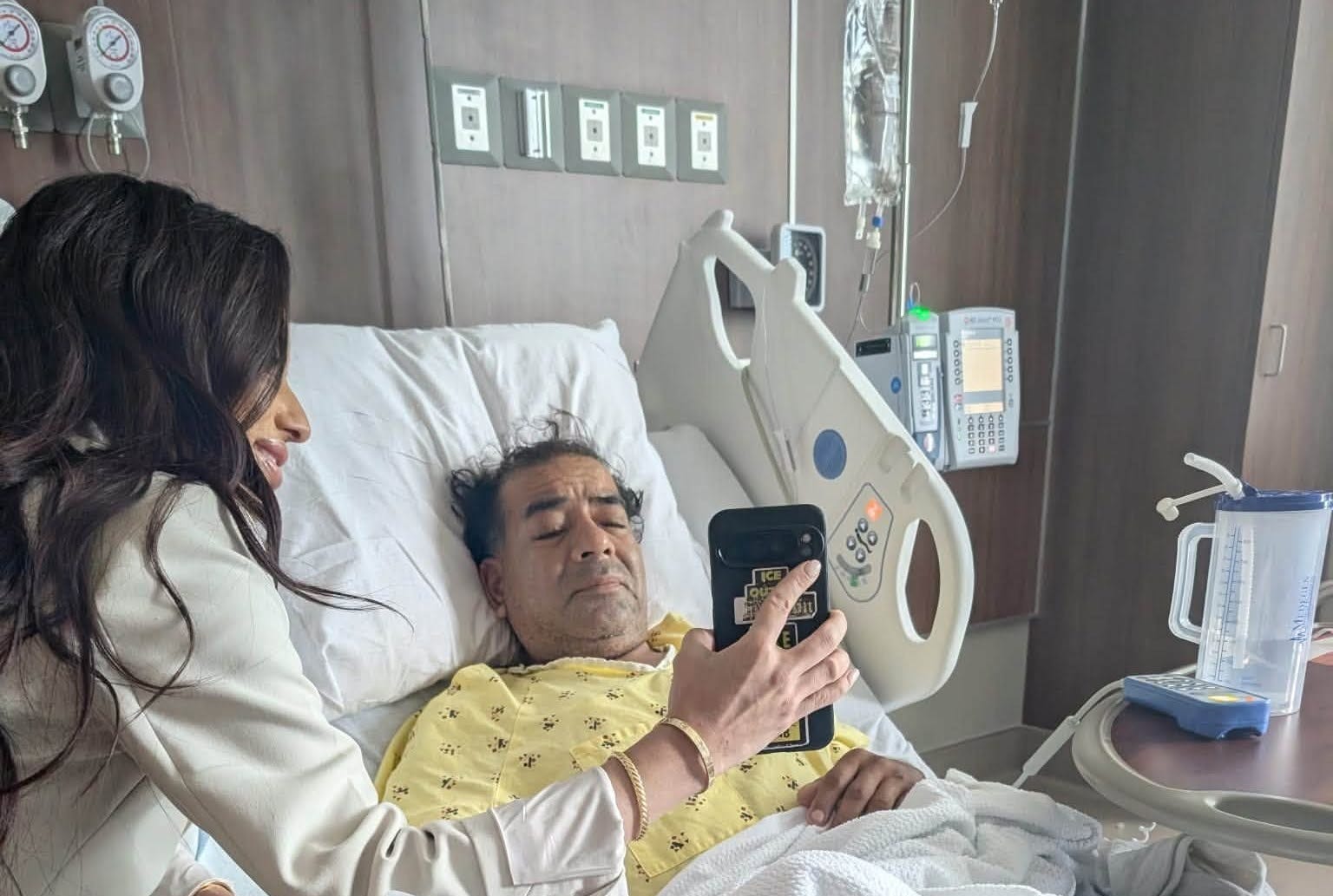
The district attorney said Parra-Hernandez is currently in a rehabilitation facility and is still facing deportation, regardless of being a “victim of a second-degree felony.”
At least three ICE officers, including Morales, have been criminally charged in connection with immigration enforcement operations during Trump’s second term.
Christian Castro, 52, faces five counts, including second-degree assault and filing a false police report, in connection with the wounding of a man during an immigration operation in Minnesota.
Gregory Donnell Morgan Jr., 35, is facing two felony counts of second-degree assault in connection with a Feb. 5 ICE operation in Minnesota, when prosecutors say he pointed a gun at the occupants of a vehicle.
Teare’s office is also investigating the fatal shooting of Lorenzo Salgado Araujo, who was killed by ICE agent Gregory Feathers after agents tried to stop the construction foreman’s van in Houston while he was on his way to a job site with his employees. Teare said the same grand jury that indicted Morales will also decide whether to indict Feathers.
“In all honesty, this was not even in the back of my mind that I would be having to investigate multiple instances of federal officers harming our community members,” Teare said.
Evidence in the Morales case
Teare said he credits the quickness of the indictments in the Morales case to the availability of body cameras and surveillance cameras. No ICE agents were wearing body cameras when Salgado was shot — but ICE changed its policy after Salgado’s sons and Democratic lawmakers such as Sylvia Garcia, D-Houston, demanded more transparency from the agency.
“I credit the advocacy of the Salgado family that they were wearing body cameras,” Teare said.
Teare said ICE has been more cooperative in this case compared to Salgado’s case.
“We are still working with laser focus on the Salgado case,” he said, mentioning his office is preparing to finish its investigation before Thanksgiving and present it to a grand jury afterward.
Teare said his office is in contact with the agent’s attorney but doesn’t know if the agent is still located in Houston.
Teare said that fewer crimes are being reported to police in Houston because victims are scared ICE will arrest them — or worse.
“They are just driving around our city, grabbing people,” Teare said of ICE agents. “That’s what’s happening. And they are not exercising any normal law enforcement tactics while they’re doing it.”
The community is living in fear, Teare said, and it’s making everyone less safe.
“An ICE badge doesn’t give you free rein to violate the constitutional rights of anyone,” he said.
