


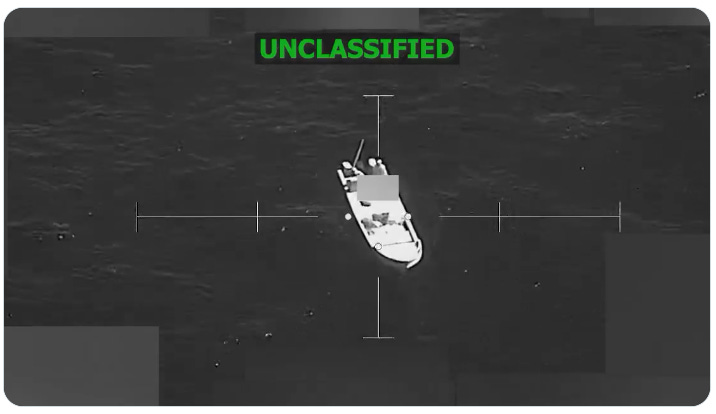
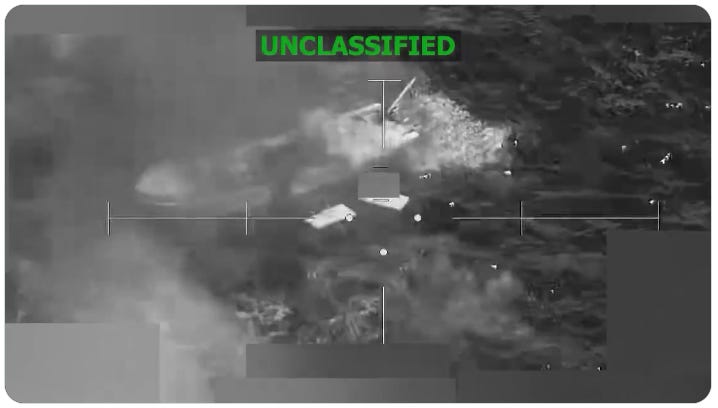
On December 15, 2025, two very different US approaches to dealing with cartel drug smuggling boats in the Pacific Ocean made headlines. The US military’s Southern Command’s “Joint Task Force Southern Spear” announced that it had targeted three boats for missile strikes.
“(The boats) operated by Designated Terrorist Organizations in international waters … were transiting along known narco-trafficking routes in the Eastern Pacific and were engaged in narco-trafficking. A total of eight male narco-terrorists were killed during these actions—three in the first vessel, two in the second, and three in the third.” -US Southern Command
On that same day, the US Coast Guard Cutter Active offloaded 27,551 pounds of cocaine, worth $203.9 million in San Diego, resulting from three separate interdictions of suspected drug-smuggling vessels in international waters off the Pacific coasts of Mexico, Central America, and South America.
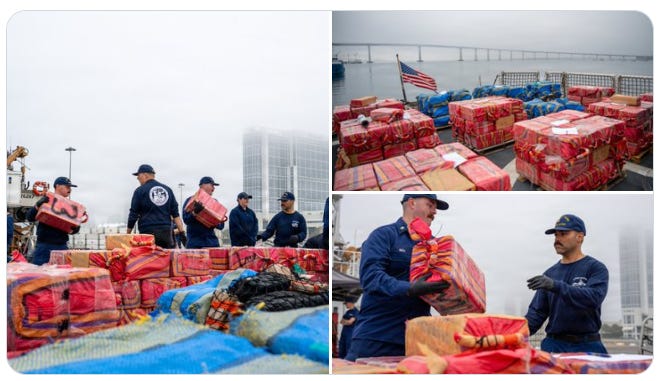
Unlike the Navy’s use of lethal force, which kills the suspected smugglers and destroys the drugs aboard the boats, the Coast Guard seizes the drugs aboard the boats it targets through “Operation Pacific Viper” and arrests those it finds piloting the smuggling boats.
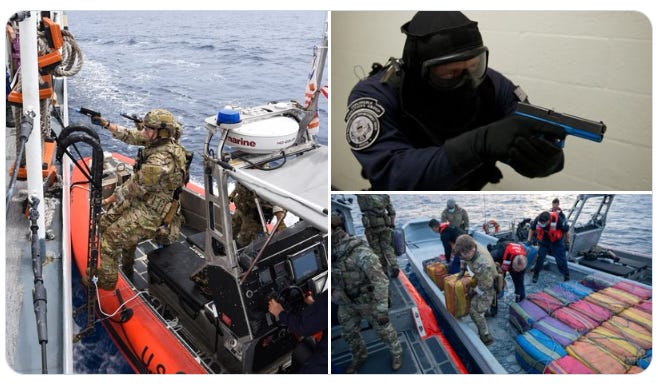
The Coast Guard usually manages to arrest their suspects without firing a shot (and if shots are fired, they take out the engines of a smuggling vessel attempting to flee) through its TACLETS (Tactical Law Enforcement Teams), whose overwhelming force convinces most smugglers to surrender without putting up a fight.
Do you think the Navy’s or the Coast Guard’s tactics are more effective or appropriate against drug smugglers?
Share your thoughts in the comments to this article.
Abrazos,
Jack Beavers
Thanks for reading the US Border News! This post is public, so feel free to share it.


Both/and is fine. The Coastguard is trained to intercept and detain, and operates under different rules of engagement. The introduction of the Navy signals a new approach because the old one was not working well.