


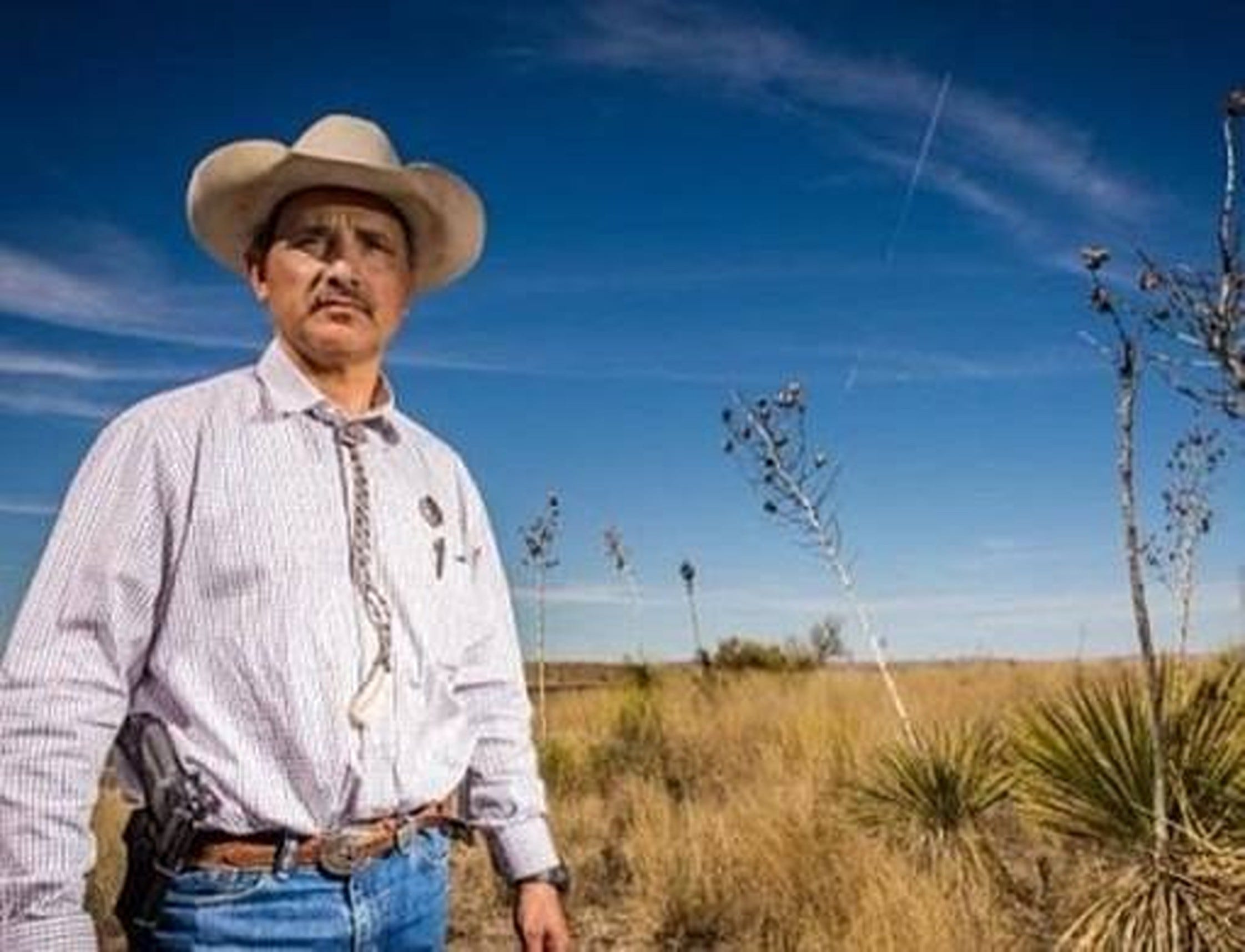
Danny Dominguez has served as Sheriff of Presidio County, Texas, since 1997 and Deputy Sheriff for six years before that. His department is responsible for 108 miles of border with Mexico and 3,856 square miles of land in one of Texas' most rugged and remote areas.
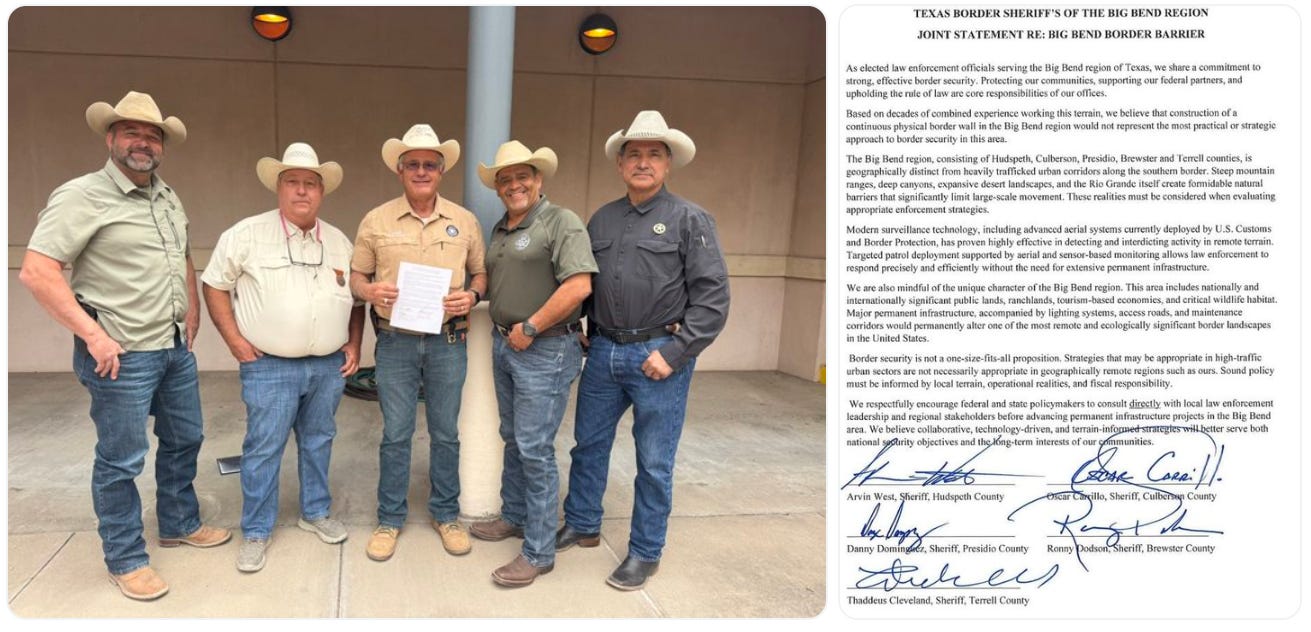
In March, 2026, he was among five Big Bend Border Sheriffs to sign a letter stating that “construction of a continuous physical border wall in the Big Bend region would not represent the most practical or strategic approach to border security in this area.”
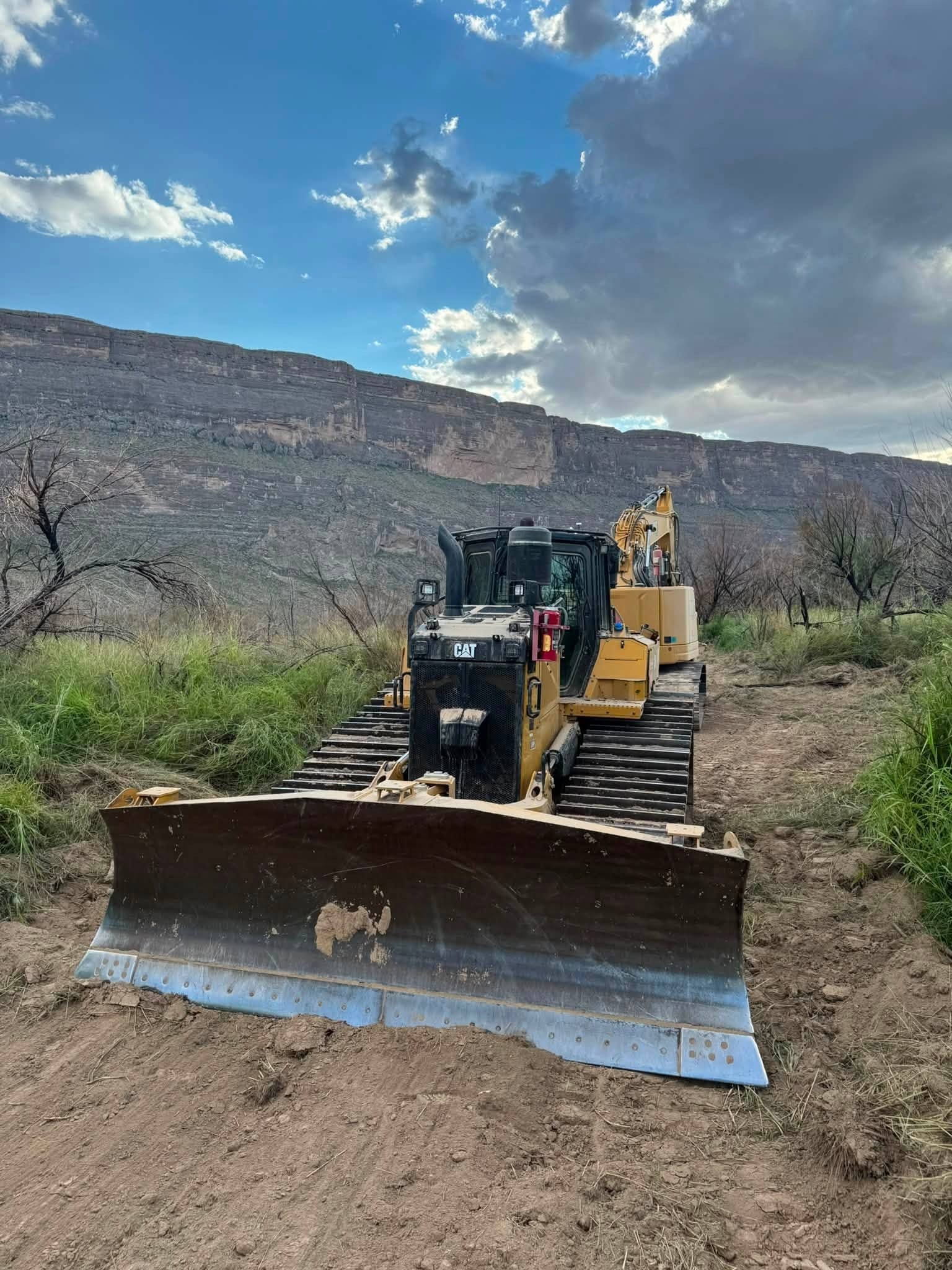
Nonetheless, earthmoving equipment belonging to federal contractors hired to build those barriers and “patrol roads” arrived in Big Bend National Park early last month. As they began plowing up sections of the park, the resulting public outcry was loud enough for US Customs & Border Protection (CBP) Commissioner Rodney Scott to halt construction until at least September 30, 2026.
Now, Sheriff Dominguez has written an open letter to federal and any other government officials who will read it to explain his opposition to construction of the border wall in his county:
To Whom It May Concern:
I am writing in my capacity as the duly elected Sheriff of Presidio County, Texas, regarding border security and the proposed construction of a continuous physical border wall through portions of Presidio County.
As Sheriff, I am responsible for law-enforcement operations throughout Presidio County and regularly coordinate with federal, state, and local law-enforcement agencies, including agencies involved in border security. Having lived and worked in this area for over 35 years and 29 years as Sheriff of Presidio County. I am personally familiar with the geography, roads, communities, ranches, mountains, canyons, and international border within Presidio County
Presidio County shares a substantial portion of its southern boundary with Mexico along the Rio Grande. Much of this border is extremely remote and consists of rugged desert, mountainous terrain, steep grades, cliffs, arroyos, and deep canyons. One of the principal routes through this area is Farm-to-Market Road 170, commonly known as the River Road, which generally follows the Rio Grande between Presidio and the Big Bend area.
I have personally traveled the River Road and am familiar with the terrain on both the United States and Mexican sides of the Rio Grande. Large portions of the Presidio County border are significantly different from more developed sections of the United States–Mexico border in urban areas such as El Paso, Eagle Pass, and the Lower Rio Grande Valley.
Along significant portions of the River Road corridor, steep mountains, canyon walls, cliffs, rugged rock formations, and other natural features substantially restrict movement. In some locations, the terrain makes vehicular passage from Mexico into the United States physically or practically impossible. In other areas, travel on foot is extremely difficult because of steep grades, canyon walls, mountainous terrain, long distances, limited water, and limited access to roads and populated areas.
These geographic realities are important when evaluating border security in Presidio County. In my experience, border-security needs cannot reasonably be evaluated under the assumption that every mile of the United States–Mexico border presents the same conditions.
Presidio County does not experience the type or volume of unlawful crossings associated with many more heavily populated and traveled border regions. Based on my experience as Sheriff and my familiarity with this portion of the border, I do not believe construction of a continuous physical border wall through the rugged portions of Presidio County is necessary to provide effective border security.
This position should not be misunderstood as opposition to border security. I strongly support enforcement of the laws of the United States and effective protection of our international border. I also recognize that physical barriers may serve a legitimate law-enforcement purpose in locations where terrain, roads, population, traffic patterns, or established smuggling routes make those barriers operationally useful.
My concern is that Presidio County is not geographically uniform. A single physical-wall solution does not account for the significant differences between individual portions of our border. Where canyon walls, mountains, riverbanks, and other natural formations already prevent or substantially restrict vehicular passage, I do not believe construction of a substantial physical wall provides a corresponding border-security benefit.
Border Patrol and other federal agencies already use numerous methods to secure the border, including law-enforcement personnel, patrol operations, existing roads, cameras, sensors, surveillance technology, aircraft, and other detection capabilities. These resources can be directed toward locations where unlawful crossings actually occur and supplemented when necessary without constructing a continuous physical barrier through every portion of the Presidio County border.
I have joined other sheriffs from the Big Bend border region in expressing concerns regarding construction of a continuous border wall in this part of Texas. Our position is based upon our collective law-enforcement experience and familiarity with the terrain and border-security conditions in the counties we serve.
In my professional judgment, border-security infrastructure should be location-specific and threat-specific. Resources should be directed toward locations where actual conditions demonstrate an operational need. I am particularly concerned about construction along the River Road corridor. Much of this corridor traverses an extraordinary natural landscape consisting of mountains, canyons, cliffs, historic areas, state park lands, recreational areas, and the Rio Grande itself. Construction of substantial border infrastructure in this terrain would require access by heavy equipment and, depending on the location, could require clearing, excavation, grading, road construction, or other alterations to the existing landscape.
Once substantial grading, excavation, or alteration of these canyon and desert landscapes occurs, the existing condition of the land cannot simply be restored immediately if the construction is later determined to have been unnecessary or unlawful.
By contrast, temporarily suspending additional construction would not eliminate the presence of Border Patrol, the Presidio County Sheriff’s Office, or other law-enforcement agencies currently securing the border. Existing law-enforcement personnel, roads, surveillance equipment, communications systems, and other border-security resources would remain operational.
Based upon my experience as Sheriff of Presidio County, I do not believe temporarily maintaining the present status quo while these issues are considered would create an immediate border-security emergency in Presidio County. Nor do I believe a temporary suspension of construction would prevent federal, state, or local law-enforcement officers from continuing to enforce the law and secure this portion of the international border.
Effective border security and preservation of Presidio County’s unique landscape are not mutually exclusive objectives. In my professional judgment, appropriate law-enforcement resources and technology can be directed to locations based upon actual operational needs while avoiding unnecessary construction in areas where the natural terrain itself already provides a substantial barrier.
Thank you for your consideration of my perspective as Sheriff of Presidio County and as a law-enforcement officer familiar with the unique geography and border-security conditions of this region.
Respectfully,
Danny Dominguez,
Sheriff of Presidio County, Texas
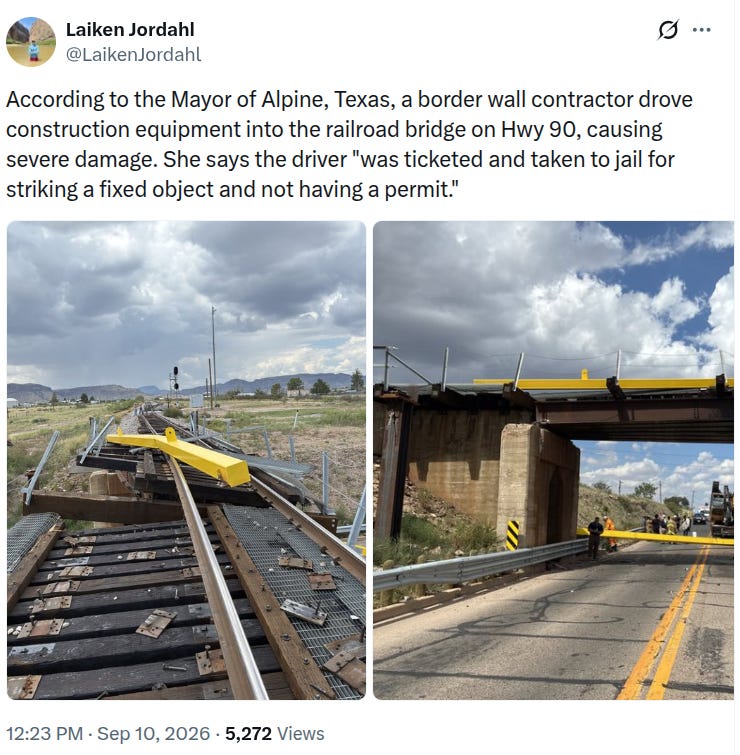
Meanwhile, despite the pause in border wall construction, the contractors hired to build it are still making their presence felt in the Big Bend. Here’s what just happened in neighboring Brewster County:
Do you agree with Sheriff Dominguez’s viewpoints about building a Border Wall in the Texas Big Bend?
Share your opinions in the comments to this article.


The redundancy of the letter takes away a bit from the impact of this important and convincing letter. The long experience of sheriffs who have been responsible for that area should be heard and acknowledged as valid. Did anyone in the Fed. government ask their opinions before moving in equipment to build the fence? Whoever is responsible for building the fence should listen to the sheriff's now. Based the surveylence equipment in place now, what is the record of apprehensions of illegals now in that area? Data would help the sheriff point.
Who ultimately decides what areas get a wall ? Will the cartels start using these no wall zones as new access points?